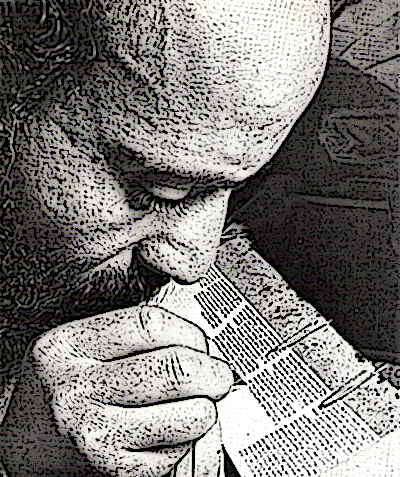
No, God did not command animal sacrifices in the time of Moses, or ever, and here is proof, straight from the Bible:
- Jeremiah the Prophet, Hilkiah the High Priest, and King Josiah existed together around the years 641 to 609 BCE.
- In 2 Kings 22:8-13, Hilkiah found the Law Scroll of Moses in the temple and read it to King Josiah. After hearing it, the king tore his robe, declared that they had not been following what is written in the scroll, and instituted a series of major reforms.
- In Jeremiah 8:8, the prophet claims that the lying pen of the scribes had changed something about the Torah recorded by Moses, likely in response to seeing this original Torah scroll discovered in the temple: “How can you say, ‘We are wise, and the Law of the LORD is with us,’ when in fact the lying pen of the scribes has produced a deception?” (Jeremiah 8:8, BSB).
- Jeremiah also declared in Jeremiah 7:22-23 that God did not speak to the children of Israel at the time of Moses regarding animal sacrifices but instead told them to listen to His voice and walk in obedience to His commands.
- So the lying pen of the scribes evidently added commands for animal sacrifices to the Torah given by God to Moses. And when Hilkiah, Josiah, and Jeremiah found the original Torah scroll (and saw that God did not therein say anything about wanting animal sacrifices), Jeremiah prophesied as such while King Josiah instituted reforms to return to the ways of the rediscovered original Torah scroll.
If Jeremiah, Josiah, and Hilkiah found the original Torah scroll that was devoid of any commands regarding animal sacrifice, and they corrected the error through reforms, how did commands of animal sacrifice get added back into the Torah?
- In Psalm 51 David declares that God does not desire animal sacrifice but instead a humble spirit and a contrite heart. Then at the end of the Psalm he is recorded as saying after the wall of Jerusalem is rebuilt, he will offer animal sacrifices to God and God will delight in them. Why does David suddenly become a hypocrite, going from admitting that God does not desire animal sacrifices to saying he will offer God animal sacrifices?
- There is a clue in the final two verses of Psalm 51 where it says that once the wall of Jerusalem is rebuilt, then God will delight in animal sacrifices. But wait, this is anachronistic since in the time of King David the wall of Jerusalem was still standing. It wasn’t until the time of Ezra-Nehemiah that the wall was down and had to be rebuilt: “You see the trouble we are in. Jerusalem lies in ruins, and its gates have been burned down. Come, let us rebuild the wall of Jerusalem, so that we will no longer be a disgrace” (Nehemiah 2:17, BSB).
- This time of Ezra-Nehemiah also happens to be when it is recorded (in Nehemiah 8:1-11) that Ezra brought out a version of the Torah that the people had not known and taught it to them anew, immediately thereafter instituting a festival that included animal sacrifice and involved eating and drinking while the people shed tears of grief.
- So apparently at the time of Ezra-Nehemiah, the wall of Jerusalem was rebuilt, animal sacrifice was reinstated, Ezra taught such to the people as if it were straight from the Torah given to Moses, and David’s psalm about God not desiring animal sacrifice received a second ending saying that when the wall is rebuilt, God will delight in the animal sacrifices.
Surely Jesus, as the incarnate Word of God, would have been aware of all this, so why didn’t He do anything to correct the error?
- He did! He went into the temple, liberated the animals being sold there, overturned the tables of those who were selling the animals for sacrifice, and unmistakably commanded them to “get these out of here” and called them a den of robbers, saying the temple is intended to be a house of prayer, not a slaughterhouse marketplace.
- The followers of Jesus likewise made it clear that Jesus intentionally ended the system of animal sacrifice through His death on the cross as our High Priest forever (Hebrews 10:3-14).
- Jesus stated in Matthew 5:17-18 that He by no means came to do away with the Torah, or even to change one jot or tittle of it, despite clearly and unmistakably ending the sacrificial system.
- This proves that the sacrificial system was never part of the original Torah given by God to Moses and that it had instead been falsely added to it later.
 Choose Love
Leave a comment