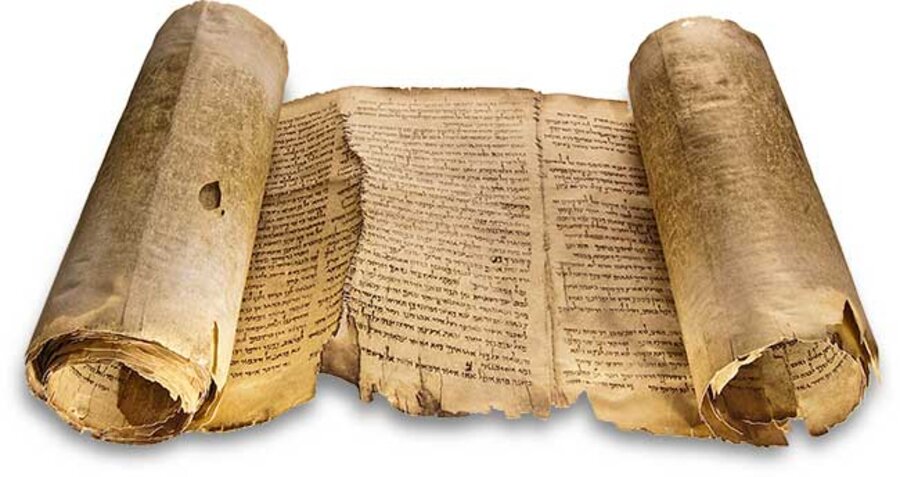
Reconstructing the Gospel that was first composed by the apostles of Jesus Christ
Purpose
- Approximately reconstruct the Gospel of the Hebrews, based on research done by other scholars in compiling evidence for this original Hebrew gospel that has otherwise, to this point, been lost to history.
Methodological Assumptions
- This Hebrew Gospel is known by several names (Judaic, Hebrew Matthew, Gospel to the Hebrews, Gospel of the Ebionites, Nazarene Gospel, and various similar permutations of these).
- This Gospel is the Q source from which the three Greek synoptics draw.
- Being the earliest Gospel, it is likely in lecture note or “sayings” format similar to the Gospel of Mark and the Gospel of Thomas, rather than in the more polished narrative form as we see in the later Greek Matthew, Luke, and John Gospels.
- I did not draw at all from the Shem Tov manuscript from the 14th century or the Vatican Ebr.100 manuscript from the 15th century in this project.
- If indication is made in an ancient manuscript marginal note or ancient author citation about an alternate rendering in the Hebrew Gospel, I assume the whole Pericope referenced is present, albeit in lecture note form. For instance, a marginal note that says, ‘Judaic gospel has Jerusalem instead of the city’ will indicate to me that the entire cited Pericope is present in some form in the Hebrew Gospel.
- When not enough evidence is present for determining if a particular Pericope is present or absent in the Hebrew Gospel, notation is made as such, but it is not assumed to be included or not included.
- There is an unknown amount of unique content in the Hebrew Gospel that is not found in any of the synoptic gospels or in any ancient citations.
- Most relevant theological divergences are cited by critics in heresiologies or by scribal marginal notes.
- When a Pericope is determined to be present in the Hebrew Gospel, the priority of rendering is typically: Thomas, Mark, Luke, Matthew. This is due to assumed proximity in preserving the original style. Nevertheless notes are made concerning differences where appropriate.
- Some of the content unique to the Gospel of Thomas is likely drawn from the Hebrew Gospel, but other unique content likely is not. Absent some way to discern between the two, no content unique to Thomas is included in this project.
- The only existent written gospel at the time of Paul’s preaching is likely Hebrew Matthew, so the few times he references something Jesus said or did, it can be reasonably inferred that he is referencing the Hebrew Matthew gospel. Correction: Paul cites the passion narrative and resurrection of Jesus, so he likely had some knowledge of Mark (or Proto-Mark/Peter).
KNOWN FACTS ABOUT CONTENT AND USE OF PROTO-GOSPEL
FIND THE EARLY CHURCH FATHER PASSAGE THAT CLAIMS THE HEBREW GOSPEL RIPS OFF LUKE (Jerome? Origen? Iraneaus? Epiphanius?)
Use. Known facts about use of Proto-Gospel
- The gospel was first preached to the Hebrews[1] in Jerusalem[2], and then to the Greek[3] Gentiles and everyone else[4] throughout the rest of the world[5].
- The first gospel[6] was in Hebrew[7] for Hebrews[8] in and around Jerusalem
- Greek synoptic gospels Matthew and Luke drew from earlier Q source
- Nazarenes and Ebionites[9] shared a Hebrew gospel[10]
- Ebionites used this gospel[11].
- Ebionites exclusively used this Hebrew gospel (Irenaeus)[12], (Eusebius)[13]
- Nazarenes used Hebrew gospel[14], even to the late-fourth century[15], in addition to later Greek gospels.
- Proto-Gospel was originally written in Hebrew[16] by Matthew[17], preserved and used by the Nazaraeans in Beroea, a city of Syria, until at least the late fourth century.
- Used by Hegesippus, a Hebrew convert[18]
- Bartholomew used it to preach in India, and left it for them to keep and preserve[19]
- Quoted by Ignatius of Antioch[20] in his letter to Polycarp (Smyrnaeans 3.2) in approx 110 CE
Content. Known facts about content of Proto-Gospel
- It shares similarities to later Greek Matthew but also has its own unique content not in Greek Matthew and omits some content in Greek Matthew.
- Omits virgin birth and genealogy (Chapters 1 and 2 of Greek Matthew)
- Allegedly suggests adoptionism because it is worded “today” in reference to Psalm 2:7 at the baptism of Jesus
- “I came to destroy the sacrifices, and if ye cease not from sacrificing, the wrath of God will not cease from you”[21]
- “He who seeks shall not cease until he finds, and finding he shall marvel, and having marveled he shall reign, and having reigned he shall rest.”[22]
- “Just now my mother, the holy spirit, took me by one of my hairs[23] and carried me to Tabor, the great mountain.”[24]
- “The second of the rich men said unto him: Master, what good thing can I do and live? He said unto him: O man, do that which is in the law and the prophets. He answered him: I have kept them. He said unto him: Go, sell all that you own and distribute it to the poor, and come, follow me. But the rich man began to scratch his head, and it pleased him not. And the Lord said unto him: How can you say: I have kept the law and the prophets? For it is written in the law: You shall love your neighbor as yourself. And behold, many of your brethren, sons of Abraham, are clad in filth, dying of hunger, and your house is full of many good things, and nothing at all goes out of it unto them. And he turned and said unto Simon his disciple, who was sitting by him: Simon, son of Jonah, it is easier for a camel to enter in by the eye of a needle than for a rich man to enter into the kingdom of heaven.”[25]
- “record about a woman who was charged for many sins before the Lord”[26]
- “Christ desired to come to earth to effect redemption, the good father called forth the celestial power, Michael by name, commending the care of Christ to him in this enterprise. And the power came down to the world, and it was called Mary, and he was in her womb for seven months. Afterward she brought him to light, and he grew in stature and chose the apostles…, was crucified and assumed by the father, who preached him everywhere. He fulfilled the appointed time that was decreed for him. The Jews grew envious of him and came to hate him. They changed the custom of their law, and they rose up against him, and laid a trap, and caught him. They turned him over to the governor, who gave him back to them to crucify”[27]
- Contra the story of calling them out of their jobs as fishermen, and more consistent with the gospel of John: “There was a certain man, Jesus by name, and he himself was about thirty years old, who elected us. And having come to Capernaum he went into the house of Simon, nicknamed Peter, and he opened his mouth and said: While passing by the lake of Tiberias I elected John and Jacob, the sons of Zebedee, and Simon, and Andrew, and Thaddeus, and Simon the Zealot, and Judas Iscariot, and you, Matthew, I called while you were sitting in the toll-booth, and you followed me. I wish, therefore, for you to be twelve apostles as a testimony of Israel.”[28]
- John the Baptist ate sweet manna cakes rather than locusts: “And John was baptizing, and Pharisees went out to him and were baptized, and all Jerusalem. And John had clothing from the hairs of a camel, and a skin belt around his loin. And his food, it says, was wild honey whose taste was of manna, as cake in oil.”[29]
- Opens with this line: “It happened in the days of Herod the king of Judea that John came baptizing a baptism of repentance in the Jordan river, who was said to be from the line of Aaron the priest, the son of Zacharias and Elizabeth, and all were going out to him.”[30]
- Many things are said between this opening line and the baptism[31]
- “When the people were being baptized, Jesus came too and was baptized by John. And as he came up out of the water the heavens opened, and he saw the holy spirit of God in the image of a dove coming down and coming onto him. And there was a voice from heaven saying: You are my beloved son. With you I am pleased. And again: Today I have begotten you. And immediately a great light illuminated the place. When John saw this, it says, he said to him: Who are you, Lord? And again there was a voice from heaven to him: This is my beloved son, with whom I am pleased. And then, it says, John walked to him and said: I request you, Lord, you baptize me. But he prevented him, saying: Allow it, since thus is it proper to fulfill all things”[32]
- “And then, when Jesus had gone to the river Jordan, where John was baptizing, and when He had stepped into the water, a fire was kindled in the Jordan; and when He came out of the water, the Holy Ghost lighted on Him like a dove.”[33]
- “Our bread for tomorrow give us this day, that is, the bread which you will give in your kingdom give us today”in two[34] places[35].
- “Since indeed the apostles supposed him a spirit, or according to the gospel which the Nazaraeans read of the Hebrews an incorporeal daemon, he says to them: Why are you troubled, and cogitations ascend in your hearts? See my hands and feet, that it is I myself. Handle and discern, because a spirit does not have flesh and bones as you see that I have. And, when he had said this, he showed them his hands and feet.”[36]
- “But according to the gospel which the Nazaraeans read, written up in Hebrew speech: The whole fount of the holy spirit shall descend over him…. Further on in the gospel of which we made mention above we find these things written: But it happened that, when the Lord ascended from the water, the whole fount of the holy spirit descended and rested over him, and said to him: My son, in all the prophets I was expecting you, that you should come, and I might rest in you. You indeed are my rest. You are my firstborn son, who reigns in eternity.”[37]
- “it places among the maximal crimes one who has caused sorrow to the spirit of his brother.”[38]
- “this man who has the dry hand is written to be a mason, praying for help with words of this kind: I was a mason, seeking a livelihood with my hands. I pray, Jesus, that you restore health to me, lest I disgracefully beg food.”[39]
- The scapegoat (Barabbas) offered by lot to Azazel is interpreted as the son of their [the crucifiers] master (Azazel/Satan), who was condemned on account of sedition and homicide.[40]
- “a lintel of the temple of infinite magnitude was broken and divided”[41]
- Alternatively: “we read, not that the veil of the temple was rent, but that the lintel of the temple, of marvelous magnitude, fell.”[42]
- “With a voice exclaiming, that is, on account of the voice of a multitude of angels exclaiming praises to God or exclaiming: Let us go out from these places, since the destruction by the Romans is imminent, as it is read in the gospel of the Nazaraeans.”[43]
- “Never be content except when you look upon your brother in charity”[44]
- [after the resurrection of the savior] “But the Lord, when he had given the shroud to the servant of the priest, went to James and appeared to him. James indeed had sworn that he would not eat bread from that hour when he had drunk the chalice of the Lord until he saw him risen from among those who sleep. And again after a little bit: Bear forth, said the Lord, a table and bread. And immediately is added: He bore bread and blessed it, and broke it, and gave it to James the just, and said to him: My brother, eat your bread, because the son of man has resurrected from among those who sleep.”[45]
- “Of those James the lesser by birth was always first beloved by Christ the savior and in turn burned with such desire for the master that after he was crucified he wished not to take food until he saw him rising from the dead, which he and his brothers remembered was predicted while he was active among the living. Therefore, he wished first of all to appear to him and to both Mary Magdalene and Peter to confirm the disciple in faith and not to allow him to suffer from fasting any longer, and he offered him a honeycomb and invited James to eat.”[46]
- “It is said that James the apostle, when he had seen the Lord already dead on the cross, cursed and sword never to eat bread unless he should discern the Lord rising. When on the third day the Lord returned, having despoiled Tartarus with his triumph, he showed himself to James and said: Rise, James; eat, because I have already resurrected from the dead. This is James the just, whom they call the brother of the Lord, since he was the son of Joseph born from another wife.”[47]
- “And, when he came to Peter and to those who were with Peter, he said to them: Behold, handle me and see that I am not an incorporeal daemon. And immediately they touched him and believed”[48]
- “Behold, the mother of the Lord and his brothers were saying to him: John the baptist is baptizing for the remission of sins. Let us also be baptized by him. But he said to them: How have I sinned, that I should go and be baptized by him? Unless perchance this that I have just said is ignorance”[49]
- “If your brother sins in word, and makes satisfaction to you, seven times a day receive him. Simon his disciple said to him: Seven times a day? The Lord responded and said to him: Still I say to you, until seventy times seven. For indeed in the prophets, even after they were anointed by the holy spirit, the speech of sin was found.”[50]
- “Hosanna barrama, that is: Hosanna in the highest”[51]
- “But by so much did the Lord love Jerusalem that he wept for it and beat his chest, and while hanging on the cross he said: Father, forgive them, for they know not what they do. And thus he obtained what he had requested, and many thousands from the Jews came to faith, and a time of penitence was given up until the forty-second year.”[52]
- “In the gospel of the Nazaraeans it is read, as Chrysostom says, that Joseph could not look at Mary face to face, since the holy spirit had filled her deeply from the conception, so that he did not recognize her on account of the .splendor of her face.”[53]
- “It is said in the gospel of the Nazaraeans that two men who had died about forty years beforehand, good and holy men, came into the temple after the resurrection of the Lord and without speaking wanted to go to Pergamum.”[54]
- [likely Joseph of Arimathea from Matt 27:57] “It is read, however, in the gospel of the Nazaraeans that Joseph was then captured and put into prison; there the Lord appeared to him first after the resurrection in the prison. Nicodemus truly fled into the village of Gamaliel.”[55]
- [likely Joseph of Arimathea from Matt 27:57] “It is said in the gospel of the Nazaraeans that the Jews put this Joseph into prison, binding him to a column, because he had interred him so honorably, and that after the resurrection he appeared to him in prison before Mary Magdalene and liberated him from prison.”[56]
- “Likewise he appeared first to Mary Magdalene amongst the women according to the order of appearances in the gospel, which I say because it is read in the gospel of the Nazaraeans that he appeared first to the virgin.”[57]
- “For a certain fiery and starry [light] radiated from his eyes, and the majesty of divinity shone in his face”[58]
Discrepancies with Greek Matthew
- Clarifies that Levi in Luke’s gospel is actually Matthias, not Matthew.[59]
- Clarifies that ‘Bethlehem of Judea’ is supposed to be ‘Bethlehem of Judah’.[60]
- “instead of the son of Berechiah, we find the son of Jehoiada”[61]
- “…into the holy city, but [rather]: …in Jerusalem.”[62]
- “The [word] vainly does not stand in certain copies, nor in the Judaic [gospel]”[63]
- “If you are in my bosom, and you do not do the will of my father in the heavens, I shall throw you away from my bosom”[64]
- “The Judaic [gospel has]: Beyond serpents”[65]
- “The Judaic [gospel has]: Snatched as plunder”[66]
- “The Judaic [gospel has]: I give you thanks”[67]
- “The Judaic [gospel] does not have: Three d[ays and three nights]”[68]
- “The Judaic [gospel has]: The corban which you will be owed from us”[69]
- “[Instead of Barjona] the Judaic [gospel has]: Son of John.”[70]
- “The Judaic [gospel has]: And he denied and swore and cursed.”[71]
- “The Judaic [gospel has]: And he delivered to them armed men, in order to be seated right before the cave and keep it day and night.”[72]
Users. Known facts about Hebrew groups using Proto-Gospel
- Nazarenes
- Paul is a ringleader of them
- Poor in Jerusalem
- Paul gave to them
- Roots of Proto-Orthodox
- Original Apostolic church community
- Ebionites
- Rejected Paul[73] (Eusebius)[74]
- Rejected all Greek gospels
- Seemed to rejected virgin birth [since not included]
- Seemed to be adoptionist [since quoting Psalm ‘Today’]
- Deemed heretical by Irenaeus of Lyon [130-202] around 180 CE
- Believed Torah Scriptures had been corrupted
3. Both groups
- Accused of judaizing
- Retained many Jewish practices
- Lived communally
- Lived in voluntary poverty
- Esteemed piety
- Esteemed James, brother of Lord as head of Jerusalem church
- Revered Jerusalem
- Embraced Enochian views
- Vegetarian
- Rejected animal sacrifice
- Similar in beliefs and practices to Essenes
4. Misunderstandings of Content or of its Users
- That Jesus confessed sin and didn’t want to be baptized[75]
- Ebionites believed Christ was a created being, the highest archangel over all creation[76]
- That the disciples were eating meat at Passover[77]
- Origen somehow confuses it with a teaching of Peter or didn’t realize the quote originated in Matthew’s Proto-Gospel to the Hebrews[78]
- Adoptionist, due to Psalm 2:7 language at baptism, despite 2 citations to the contrary: (1) Christ entering Mary’s womb prior to birth, and (2) filling her with the Holy Spirit, making her face shine.
—————————
Narrative
[Note: My position is now that the Ebionim/Nazarenes are the apostles and followers of Jesus. None of their beliefs or practices would therefore have been heretical. Epiphanius (and others) mischaracterize the beliefs of the Ebionim/Nazarenes in places where they are deemed heretical, rather than the Ebionim/Nazarenes actually holding the heretical beliefs that are (mis)attributed to them].
It is easy to look back on the earliest days of the Jesus movement and pick out all the things the Ebionites and the Nazarenes got wrong doctrinally. We have centuries of theological refinement available to us that they did not have. What is more challenging is to humble ourselves enough to see what they got right that we today get wrong. They understood the humanity of Jesus better than we do today, and better than their critics did. They were the direct ecclesial descendents of Jesus and the apostles, composed of members who either themselves had firsthand encounters with the apostles or who were led by those who had. They lived in the culture that Jesus and the apostles lived in, and experienced many of the same trials and persecutions. So their knowledge of what was taught by Jesus and the apostles concerning how to walk as Jesus walked, and to live as the apostles lived, far surpasses what we could imagine today, nearly two thousand years removed from it all.
The reason they didn’t fully understand the divinity of Christ or, in the case of the Ebionites, Paul’s message for the Gentiles, is because neither of these things were central to their faith. Their focus was on understanding the humanity of Jesus and walking just as He walked. As such, they are an invaluable resource for reconnecting with the humanity of Jesus as taught and exemplified from the foundation of the movement.
It is important to separate the text from the interpretation of the text. For instance, the Ebionites are accused of adoptionist Christology based on the variant rendering of Hebrew Matthew on the baptism passage. My contention is that they misunderstood the passage because a theological framework for correctly understanding the passage hadn’t yet been developed. The Trinity doctrine was not fully worked out until the Council of Constantinople in 381, centuries after the Ebionites and the Nazarenes came into being and established their identity.
Epiphanius quotes this passage from the Hebrew Matthew gospel, and then describes the Ebionite adoptionist position that is based on this passage. Epiphanius thus concludes that the gospel is fraudulent since it supports their heretical adoptionist position. But if we read the text closely, it supports the true Trinity doctrine more than it supports the heretical Ebionite misinterpretation of the passage. The purpose of the baptism was to reveal the fullness of the godhead to the world. “This day” refers to the eternal presence of the Father, Son, and Holy Spirit, and the “begetting” is the eternal form of the relationship between the three. “This day” is a reference to Psalm 2:7, which would have been recognizable to the Hebrew audience. It may have been removed when Matthew’s Gospel was reworked for a Greek audience that would not have recognized the nuanced references to Hebrew Scriptures.
Epiphanius says:
And after a good deal more it continues that:
After the people were baptized, Jesus also came and was baptized by John; and as he came up from the water, the heavens were opened, and he saw the Holy Ghost in the likeness of a dove that descended and entered into him: and a voice from heaven saying: Thou art my beloved Son, in thee I am well pleased: and again: This day have I begotten thee. And straightway there shone about the place a great light. Which when John saw (it saith) he saith unto him: Who art thou, Lord? and again there was a voice from heaven saying unto him: This is my beloved Son in whom I am well pleased. And then (it saith) John fell down before him and said: I beseech thee, Lord, baptize thou me. But he prevented him saying: Suffer it (or let it go): for thus it behoveth that all things should be fulfilled.
And on this account they say that Jesus was begotten of the seed of a man, and was chosen; and so by the choice of God he was called the Son of God from the Christ that came into him from above in the likeness of a dove. And they deny that he was begotten of God the Father, but say that he was created as one of the archangels, yet greater, and that he is Lord of the angels and of all things made by the Almighty, and that he came and taught, as the Gospel (so called) current among them contains, that, ‘I came to destroy the sacrifices, and if ye cease not from sacrificing, the wrath of God will not cease from you’.
Nazarenes and Ebionites used the same gospel, yet had two distinct readings. Ebionites were a Hebrew Matthew only sect, which allows us to get a clearer picture of what this gospel included and omitted. Nazarenes would be a sort of control group since they evidently accepted the Hebrew Matthew gospel while also accepting Paul and the Greek gospels of Mark, Luke, and John.
References for three-source Q hypothesis:
https://en.m.wikipedia.org/wiki/Three-source_hypothesis
Scholarly source on early Jewish Christian views on Animal Sacrifice:
Great resource to mine for early evidence: [completely mined and added as references]
http://www.textexcavation.com/jewishgospels.html#irenaeus
Additional Scholarly Resources on Proto-Gospel:
https://www.earlychristianwritings.com/text/gospelhebrews-mrjames.html
Hebrew Gospel of Matthew
Beginning footnote: Not to be confused with the Shem Tov manuscript from the 14th century or the Vatican Ebr.100 manuscript from the 15th century.
——————
Epiphanius in these passages of his Panarion: 30.13.1-8, 30.14.5, 30.16.4-5, and 30.22.4.
And they (the Ebionites) receive the Gospel according to Matthew. For this they too, like the followers of Cerinthus and Merinthus, use to the exclusion of others. And they call it according to the Hebrews, as the truth is, that Matthew alone of New Testament writers made his exposition and preaching of the Gospel in Hebrew and in Hebrew letters.
41. John was baptizing, and there went out unto him Pharisees and were baptized, and all Jerusalem. And John had raiment of camel’s hair and a leathern girdle about his loins: and his meat (it saith) was wild honey, whereof the taste is the taste of manna, as a cake dipped in oil. That, forsooth, they may pervert the word of truth into a lie and for locusts put a cake dipped in honey (sic).
A locust in Greek is akris, and the word they used for cake is enkris, so the change is slight. We shall meet with this tendency again.
‘I came to destroy the sacrifices, and if ye cease not from sacrificing, the wrath of God will not cease from you’.
——————
[1] Isaiah 49:6
[2] Luke 24:47
[3] Romans 1:16; 2:10
[4] Acts 13:46
[5] Acts 1:8
[6] “Matthew also issued a written Gospel among the Hebrews in their own dialect, while Peter and Paul were preaching at Rome, and laying the foundations of the Church. After their departure, Mark, the disciple and interpreter of Peter, did also hand down to us in writing what had been preached by Peter. Luke also, the companion of Paul, recorded in a book the Gospel preached by him. Afterwards, John, the disciple of the Lord, who also had leaned upon His breast, did himself publish a Gospel during his residence at Ephesus in Asia” (Irenaeus, Against Heresies, 3.1.1).
[7] “As learned in tradition concerning the four gospels, which even alone are not spoken against in the church of God under heaven, that the first written that according to the one who was once a publican, but later an apostle of Jesus Christ, Matthew, who published it for those from Judaism who had believed, ordered together in Hebraic letters” (Origen, early 3rd century, from the Commentary on Matthew, as cited in Eusebius, History of the Church 6.25.4).
[8] “First of all is Matthew, a publican with the cognomen of Levi, who published a gospel in Judea in the Hebrew speech, especially on account of those who had believed in Jesus from among the Jews, and with the shadow of the law in no way succeeding he served the truth of the gospel” (Jerome, On Famous Men 2.15).
[9] “In the gospel which the Nazaraeans and Ebionites use, which we recently translated from Hebrew speech into Greek, and which is called by many the authentic [gospel] of Matthew…” (Jerome, On Matthew 2, commentary on Matthew 12.13).
[10] “And some indeed catalogue also the gospel according to the Hebrews among these, in which those of the Hebrews who have accepted Christ especially rejoice”(Eusebius, History of the Church 3.25.5).
[11] “And they themselves also accept the gospel according to Matthew. For this they use alone, as also those from Cerinthus and Merinthus. But they call it according to the Hebrews, since it is true to say that Matthew alone in the New Testament made the layout and preaching of the gospel in Hebrew, and in Hebraic letters” (Epiphanius, Panarion 30.3, writing of the Ebionites).
[12] “[The Ebionites], however, use only that gospel which is according to Matthew, and renounce the apostle Paul, calling him an apostate from the law” (From Irenaeus, Against Heresies 1.26.2); “The Ebionites indeed, using only that gospel which is according to Matthew, are convicted by that alone, not presuming rightly about the Lord” (From Irenaeus, Against Heresies 3.11.7).
[13] “And these reckoned that all the epistles of the apostle ought to be denied, calling him an apostate from the law, and, using only the gospel called according to the Hebrews, they make little of the word of the rest” (Eusebius, History of the Church 3.27.4).
[14] “In the gospel according to the Hebrews, which indeed is written in Chaldean and Syrian speech, but with Hebraic letters, which the Nazarenes use until this day, according to the apostles, or as most term it according to Matthew, which is also held in the Caesarean library” (Jerome, Against the Pelagians 3.2).
[15] “And [the Nazoraeans] have the gospel according to Matthew very complete in Hebrew. For among them this is clearly still preserved, just as it was written from the beginning in Hebraic letters. But I do not know if it has taken away the genealogies from Abraham to Christ” (Epiphanius, Panarion 29.9).
[16] “These things therefore are recorded by Papias about Mark. But about Matthew he says these: Matthew therefore in the Hebrew dialect ordered together the oracles, and each one interpreted them as he was able” (Eusebius, History of the Church 3.39.16, citing Papias, Exegesis of the Oracles of the Lord).
[17] “Matthew, who is also Levi, the ex-publican apostle, first composed in Hebraic letters the gospel of Christ in Judea on account of those who had believed from among the circumcision; who afterward translated it into Greek is not sufficiently certain. Furthermore, this Hebraic [text] is held even until today in the Caesarean library which Pamphilus the martyr studiously put together. There was an opportunity for me from the Nazaraeans to copy this volume, which is used in Beroea, a city of Syria. In which [gospel] it must be noted that, wherever the evangelist, whether from his own person or from the Lord and savior, makes use of testimonies of the old scriptures, he does not follow the authority of the seventy translators, but the Hebrew. From which things two are: From Egypt did I call my son, and: For he shall be called a Nazarene.” (Jerome, On Famous Men 3). See also the epistle of Jerome to Damasus, epistle 20.
[18] “[Hegesippus] sets out something from the gospel according to the Hebrews and from the Syriac, and likewise from the Hebrew dialect, making apparent that he himself had come to faith out of the Hebrews. And other things also he records, as if from the unwritten Jewish tradition” (Eusebius, History of the Church 4.22.8).
[19] “…one also was Pantaenus, and it is said that he went to the Indians, where word has it he found that the gospel according to Matthew had preceded him among some there who had known Christ, to whom Bartholomew, one of the apostles, had preached and left them the writing of Matthew in letters of the Hebrews, which was even saved unto the time mentioned” (Eusebius, History of the Church 5.10.2-3).
[20] Jerome, On Famous Men 16, writing of Ignatius
[21] Epiphanius, Panarion 30.16, writing of the Ebionites
[22] “Which also is written in the gospel according to the Hebrews: He who marveled shall reign, and he who reigned shall rest” (Clement of Alexandria, Miscellanies 2.9); “For those things can be the same as these: He who seeks shall not cease until he finds, and finding he shall marvel, and having marveled he shall reign, and having reigned he shall rest” (Clement of Alexandria, Miscellanies 5.14).
[23] “But he who reads the Song of Songs and understands the spouse of the soul to be the speech of God, and believes the gospel which we recently translated, that published as according to the Hebrews, in which from the person of the savior it is said: Just now my mother, the holy spirit, bore me by one of my hairs, [such a reader] will not doubt to say that the speech of God springs from the spirit, and that the soul, which is the spouse of the speech, has the holy spirit as a mother-in-law, which among the Hebrews is said by the female gender, rua (רוח).” (Jerome, On Micah 2, commentary on Micah 7.6). See also On Isaiah 11, commentary on Isaiah 40.9, and commentary on Ezekiel 16.13.
[24] “But if any should admit the gospel according to the Hebrews, where the savior himself says: Just now my mother, the holy spirit, took me by one of my hairs and carried me to Tabor, the great mountain, he will be confused as to how the holy spirit can be the mother of Christ, born through the word” (Origen, On John 2.12, commentary on John 1.3); “And if any accepts the [statement]: Just now my mother, the holy spirit, took me by one of my hairs and carried me to Tabor, the great mountain” (Origen, On Jeremiah, homily 15.4).
[25] “It is written in a certain gospel, which is called according to the Hebrews…” (Origen, Latin version of On Matthew 15.14).
[26] “another record about a woman who was charged for many sins before the Lord, which the gospel according to the Hebrews has. And let these things also be necessarily observed by us on top of the things that have been set out” (Eusebius, History of the Church 3.39.17).
[27] “It is written in [the gospel] according to the Hebrews that…” (Cyril of Jerusalem (or Pseudo-Cyril), Discourse on Mary Theotokos 12a).
[28] “In the gospel among them named according to Matthew, but not all very complete, but illegitimized and adulterated, but they call it the Hebraic [gospel], it states…” (Epiphanius, Panarion 30.13, writing of the Ebionites).
[29] “…So that clearly they exchange the word of truth for a falsehood, and instead of locusts they make it cakes in honey” (Epiphanius, Panarion 30.13, writing of the Ebionites).
[30] “And the beginning of the gospel among them has…” (Epiphanius, Panarion 30.13, writing of the Ebionites).
[31] “And after it says many things it states…” (Epiphanius, Panarion 30.13, writing of the Ebionites).
[32] Epiphanius, Panarion 30.13, writing of the Ebionites.
[33] Justin Martyr, Dialogue with Trypho 88.3
[34] Jerome, commentary on Psalm 135
[35] “In the gospel which is named according to the Hebrews, instead of supersubstantial bread I found mahar (מהר), which means of tomorrow, so that the sense would be: Our bread for tomorrow, that is, the future [bread] give us this day.” (Jerome, On Matthew 1, commentary on Matthew 6.11).
[36] Jerome, On Isaiah, preface to book 18
[37] Jerome, On Isaiah 4, commentary on Isaiah 11.2. See also Hugo of Saint Cher, On the Book of Isaiah.
[38] “And in the gospel which the Nazaraeans are accustomed to read, according to the Hebrews” (Jerome, On Ezekiel 6, commentary on Ezekiel 18.7).
[39] “In the gospel which the Nazaraeans and Ebionites use, which we recently translated from Hebrew speech into Greek, and which is called by many the authentic [gospel] of Matthew…” (Jerome, On Matthew 2, commentary on Matthew 12.13).
[40] “This man [Barabbas] is interpreted in the gospel which is written according to the Hebrews” (Jerome, On Matthew 4, commentary on Matthew 27.16).
[41] Jerome, On Matthew 4, commentary on Matthew 27.51
[42] “But in the gospel which is written with Hebraic letters we read…” (the epistle of Jerome to Hedibia, epistle 120).
[43] Hugo of Saint Cher, On the Book of Isaiah. See also the epistle of Jerome to Marcella (epistle 46).
[44] “As we read also in the Hebraic gospel, the Lord, speaking to the disciples, says…” (Jerome, On Ephesians 3, commentary on Ephesians 5.4).
[45] “Also the gospel which is named according to the Hebrews, and which was recently translated by me into Greek and Latin, which also Origen often used, refers after the resurrection of the savior…” (Jerome, On Famous Men 2). Jesus revealing Himself to James is confirmed by Paul in 1 Corinthians 15:7.
[46] Pseudo-Abdias, Apostolic Histories 6.1 (6th century)
[47] Gregory of Tours, Book of Ten Histories 1.22 (6th century)
[48] “and properly to Polycarp, commending the Antiochene church to him, in which he put testimony also of the gospel which was recently translated by me about the person of Christ, saying…” (Jerome, On Famous Men 16, writing of Ignatius, referencing his epistle to the Smyrnaeans 3.2.
[49] “In the gospel according to the Hebrews, which indeed is written in Chaldean and Syrian speech, but with Hebraic letters, which the Nazarenes use until this day, according to the apostles, or as most term it according to Matthew, which is also held in the Caesarean library, it narrates the story…” (Jerome, Against the Pelagians 3.2).
[50] “And in the same volume he says…” (Jerome, Against the Pelagians 3.2). See also Marginal gloss at Matthew 18.22, miniscules 566 and 899.
[51] “At last Matthew, who wrote the gospel in Hebrew speech, puts it thus…” (the epistle of Jerome to Damasus, epistle 20).
[52] The epistle of Jerome to Hedibia, epistle 120, citing the gospel of the Nazarenes (Haimo, commentary II, On Isaiah 53.12).
[53] Hugo of Saint Cher, On the Gospel according to Matthew
[54] Hugo of Saint Cher, On the Gospel according to Matthew
[55] Hugo of Saint Cher, On the Gospel according to John
[56] Hugo of Saint Cher, On the Gospel according to Matthew
[57] Hugo of Saint Cher, On the Epistles of Paul (1 Corinthians 15).
[58] Jerome, commentary on Matthew 21.15, confirmed by a marginal note in the Bible known as the Aurora of Petrus de Riga.
[59] “It seems that in the one according to Luke Matthew is named Levi, but it is not the same [person], but rather the Matthias who was installed instead of Judas and Levi are one [person] with a double name. This appears in the gospel according to the Hebrews” (Didymus the Blind, commentary on Psalm 34.1)
[60] “In Bethlehem of Judea: This is an error of the scribes; we suppose indeed that it was first published from the evangelist as we read in the Hebraic [gospel], of Judah, not of Judea.” (Jerome, On Matthew 1, commentary on Matthew 2.5).
[61] “In the gospel which the Nazaraeans use…” (Jerome, On Matthew 4, commentary on Matthew 23.35).
[62] “The Judaic [gospel] does not have…” (Marginal gloss at Matthew 4.5, miniscule 566).
[63] Marginal gloss at Matthew 5.22, miniscule 1424
[64] “Here the Judaic [gospel] has thus…” (Marginal gloss at Matthew 7.5, miniscule 1424).
[65] Marginal gloss at Matthew 10.16, miniscule 1424
[66] Marginal gloss at Matthew 11.12, miniscule 1424
[67] Marginal gloss at Matthew 11.25, miniscule 1424
[68] Marginal gloss at Matthew 12.40, miniscule 899
[69] Marginal gloss at Matthew 15.5, miniscule 1424
[70] Marginal gloss at Matthew 16.17, miniscules 566 and 1424
[71] Marginal gloss at Matthew 26.74, miniscules 4, 273, 566, 899, and 1424
[72] Marginal gloss at Matthew 27.65, miniscule 1424
[73] “[The Ebionites], however, use only that gospel which is according to Matthew, and renounce the apostle Paul, calling him an apostate from the law” (From Irenaeus, Against Heresies 1.26.2).
[74] “And these reckoned that all the epistles of the apostle ought to be denied, calling him an apostate from the law, and, using only the gospel called according to the Hebrews, they make little of the word of the rest” (Eusebius, History of the Church 3.27.4).
[75] “In which book, against all the scriptures, you will find Christ even confessing his own sin, who alone failed in nothing at all, and that he was compelled by his own mother Mary almost unwillingly to accept the baptism of John, that likewise, when he was baptized, a fire was seen over the water, which is written in no gospel, and that after so much time Peter and Paul, after the bringing together of the gospel in Jerusalem and the mutual cogitation and the altercation and disposition of matters to be done, finally [were] in the city [of Rome], as if there first they recognized each other, and certain other things of this nature, absurdly and disgracefully concocted, which you will find all congested in that book” (Cyprian (or pseudo-Cyprian), On Rebaptism 100.17, writing about a book called the preaching of Paul).
[76] “And they say that he was not engendered from God the father, but created, as one of the archangels, but being greater than they are, and that he is Lord both of angels and of all things made by the creator of all” (Epiphanius, Panarion 30.16, writing of the Ebionites).
[77] “And they themselves, having removed from themselves the following of the truth, changed the word, which is apparent to all from the words in context, and made the disciples to say: Where do you wish us to prepare the Passover for you to eat? And they made him to clearly say: It is not with desire that I have desired to eat meat, this Passover, with you, is it?” (Epiphanius, Panarion 30.22, writings of the Ebionites).
[78] “If someone truly wishes to recite to us from that little book which is called the teaching of Peter, where the savior is seen to say to the disciples: I am not an incorporeal daemon, it must first be responded to that person that this book is not held among the ecclesiastical books, and [then] demonstrated that it was written neither by Peter nor by any other one who was inspired by the spirit of God” (Origen, On First Things 1, preface 8).
 Choose Love
Leave a comment